
Home » MVA Services » Electrical Testing & Diagnostic Services » Excitation Current Testing
A transformer’s magnetic circuit can provide valuable clues about its internal condition. Excitation current testing helps evaluate that circuit and identify irregularities that may involve the core, windings, or tap changer. At MVA, we use this information as part of a broader electrical diagnostic assessment to help customers understand equipment condition and determine appropriate next steps.
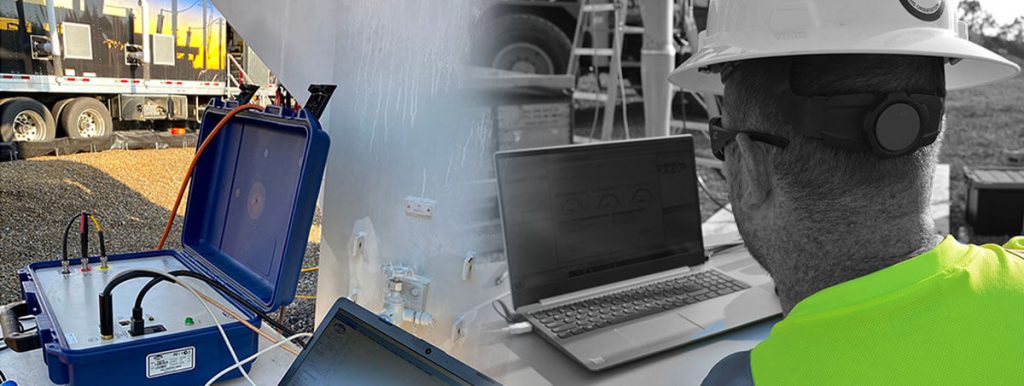
Excitation current is the current required to establish magnetic flux within a transformer’s core. During an offline test, controlled AC voltage is applied to a winding and the resulting current is measured while other windings remain open, according to the applicable test configuration.
The measurements help reveal how the transformer’s magnetic circuit responds under defined test conditions. Abnormal results can indicate core problems, winding defects such as shorted turns, or certain tap changer issues that require further investigation.
The value of excitation current testing comes from interpreting the measurements in context. Technicians evaluate the pattern across phases and, where appropriate, across tap positions. Available factory records and previous field results can provide useful comparisons.
Phase readings are not necessarily expected to be identical. Transformer design, winding configuration, and core construction influence the normal pattern. A meaningful assessment considers those characteristics before identifying a result as unusual.
Depending on the transformer and test arrangement, excitation current testing can help investigate:
Conditions affecting the magnetic core.
Shorted turns or other winding abnormalities.
Tap changer connection or contact concerns.
Unexpected changes from previous test results.
Excitation current measurements can be particularly useful when evaluating both de-energized and on-load tap changers, although additional testing may be needed to establish the nature of a problem.
MVA can incorporate excitation current testing into a transformer commissioning, maintenance, or troubleshooting scope. It may be appropriate when establishing initial test records, investigating abnormal diagnostic findings, or evaluating equipment following repair.
The test also complements other electrical assessments. Transformer turns ratio testing, winding resistance testing, and sweep frequency response analysis each examine different aspects of transformer condition. Reviewing the findings together helps develop a more complete understanding of a suspected issue.
A change in excitation current does not automatically confirm internal damage. Test voltage, connections, tap position, and the transformer’s magnetic state can influence results. Residual magnetism, including magnetism introduced during DC winding resistance testing, can affect excitation current measurements and must be considered when planning and interpreting the test.
Documenting test conditions supports useful comparisons over time. MVA’s approach connects electrical measurements with the transformer’s history, available oil diagnostic findings, and the reason for testing.
MVA brings together transformer electrical diagnostics, oil testing, and field services to support customers from initial investigation through corrective work. Our team helps determine which tests fit the situation and whether findings warrant additional evaluation, maintenance, or repair.
Whether you are preparing a transformer for service or investigating a change in performance, MVA provides the expertise to help you make informed decisions about your equipment.
Contact us to discuss excitation current testing or request a quote for transformer electrical diagnostic services.

TRANSFORM. INFORM. ADJUST. DIRECT. PROGRESS.