
Home » MVA Services » Electrical Testing & Diagnostic Services
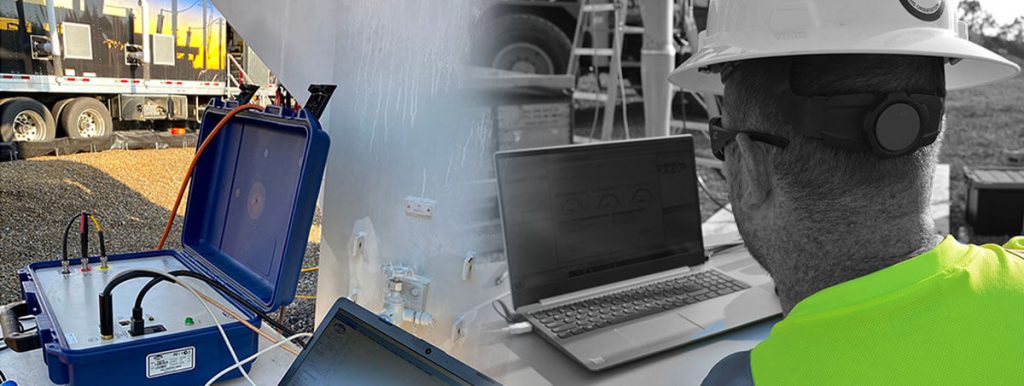
Electrical diagnostic testing helps you understand the condition of a transformer before returning it to service, planning a repair, or deciding what to investigate next. MVA performs field testing on new, aging, and recently repaired transformers, then evaluates the results alongside equipment history, factory data, and oil diagnostics to provide practical recommendations.
A change in dissolved gas analysis (DGA) results may indicate an electrical or thermal fault, but oil testing alone may not identify the affected component. Electrical tests can provide additional evidence about the windings, insulation, bushings, core, and connections. The appropriate tests depend on the transformer’s design, condition, and reason for testing.
Power factor and capacitance testing evaluates the condition of insulation systems and bushings. Changes from previous results can help identify moisture, contamination, or insulation deterioration that warrants further investigation.
Transformer turns ratio (TTR) testing checks whether measured winding ratios match the expected values at each tested tap position. It can help identify winding or tap changer concerns and verify connections after installation or repair.
Winding resistance testing measures resistance through the windings and associated current paths. Comparing phases and tap positions can help reveal poor connections, contact problems, or irregularities in the winding circuit.
Sweep frequency response analysis (SFRA) compares a transformer’s electrical response across a range of frequencies. It is particularly useful when investigating possible winding movement or mechanical changes after a fault, transportation, or other physical stress. Results are most useful when suitable factory or previous test records are available for comparison.
Excitation current testing provides information about the transformer’s magnetic circuit and can help identify conditions affecting the core, windings, or tap changer.
Insulation resistance testing offers another measure of insulation condition and can help support decisions about additional testing or energization.
MVA selects and performs tests based on the question that needs to be answered. A post-repair evaluation, for example, may call for a different scope than routine condition assessment or an investigation prompted by changing DGA results.
Electrical testing establishes a useful baseline for a new transformer and helps verify its condition before energization. After assembly and vacuum filling, MVA can perform field tests and compare the findings with factory results. Those records give asset owners a starting point for evaluating future changes.
Testing is also valuable after maintenance, component replacement, an external fault, or a transformer repair. Depending on the work performed, results can help verify connections, assess the affected components, and document the transformer’s condition before it returns to service.
No single electrical test tells the full story of a transformer. MVA’s experienced team reviews findings together, including test history and transformer oil diagnostic results, to help determine whether a result represents an emerging concern, a condition requiring further investigation, or an issue that calls for corrective work.
MVA offers both diagnostics and transformer field services. When testing identifies a problem, our team can help customers move from evaluation to a plan for maintenance or repair.
Need to establish a baseline or investigate a transformer concern? Request a quote for electrical diagnostic testing.

TRANSFORM. INFORM. ADJUST. DIRECT. PROGRESS.