
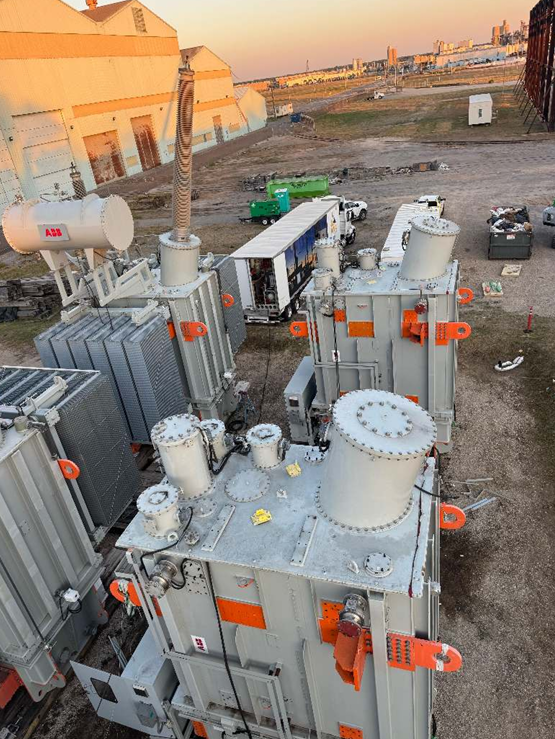
 When MVA’s field crew prepared four 500 kV transformers for a barge trip to Pennsylvania, the work started well before the units reached the water. The crew drained and disassembled all four for transport, with reassembly and vacuum filling planned at the destination.
Whether you’re relocating one transformer across a plant or moving several units between substations, plan the work at both ends before the carrier arrives. Use this checklist to define who owns each handoff, what records travel with the transformer, and what needs to be ready when it arrives.
1. Document the Transformer’s Condition Before Shipment
- Gather the nameplate, asset ID, drawings, manufacturer instructions, and available maintenance records.
- Record existing leaks, visible damage, and missing or damaged accessories. Take dated photos of the unit and its connections before disassembly.
- Collect previous electrical test reports and oil analysis results. Agree with your testing team on any additional baseline testing so you have results to compare with findings at the destination.
2. Agree on the Shipping Configuration and Field Scope
- Confirm the shipping configuration with the equipment owner, field crew, and transport team using the manufacturer’s requirements. Identify which bushings, radiators, or other accessories need to come off and what can remain in place.
- Assign responsibility for insulating fluid handling, storage, and transport or disposal, as applicable. Confirm what fluid will be available for filling at the destination.
- Label removed components, connections, and hardware by unit and position. Create a packing list that shows what ships with the transformer and what will arrive separately.
3. Assign Responsibility at Every Handoff
- Give the rigging and transport teams verified shipping weights and dimensions for the agreed configuration. Confirm who owns route planning, permits, loading, offloading, and any transfer between carriers.
- Name the person responsible for releasing the unit for shipment and the person responsible for accepting it at the destination. Agree on which condition records and transport monitoring data, if specified, each team will receive.
- Decide who reviews and resolves any shipment exception, such as visible damage, a missing accessory, or a transport monitor reading outside the agreed limits.
4. Make Sure the Receiving Site Is Ready
- Confirm that the foundation, delivery access, offloading area, and space for field equipment will be ready before arrival.
- Coordinate crew dates and staging space for the transformer, accessories, and oil handling equipment. Confirm availability of replacement gaskets and any parts needed for reassembly.
- Set the delivery, assembly, and commissioning dates together. If site construction, transport, or parts delivery slips, identify which activities need to be rescheduled.
5. Define What Must Happen Before Energization
- Schedule the receiving inspection and reconcile the delivered components against the packing list.
- Confirm the scope for reassembly, vacuum filling where specified, and electrical and oil testing. Agree on which pre-move results the commissioning team will use for comparison.
- Identify who reviews the commissioning results, closes outstanding items, and authorizes energization.
Planning a Transformer Relocation? Bring MVA In Early
MVA can help you define the field scope at the departure and receiving sites, from preparing the transformer for shipment to reassembly, vacuum filling, and commissioning. Share the transformer nameplate, origin and destination, target move dates, and planned in-service date so we can help you build the scope around your schedule.
Explore MVA’s transformer commissioning services and request a quote.